
How Can Child Psychiatrist Treatment in Rajendra Nagar Help Children with Anxiety and Stress?
Children can experience anxiety and stress just like adults. However, they may not always know how to explain what they are feeling. Child Psychiatrist Treatment in Rajendra Nagar can help parents understand the reasons behind a child’s anxiety, identify emotional or behavioural concerns, and develop an age-appropriate treatment plan. Professional support can be particularly helpful when worries begin affecting a child’s school performance, sleep, relationships, confidence, or everyday activities.
For fast information, chat with us directly on WhatsApp.
Understanding Anxiety and Stress in Children
Some level of worry is a normal part of childhood. Children may feel anxious before an examination, when starting a new school, while meeting new people, or during major changes at home.
The concern arises when anxiety becomes frequent, intense, or difficult for the child to manage. According to the American Academy of Child and Adolescent Psychiatry (AACAP), anxiety may become problematic when it interferes with a child’s daily activities and functioning.
Children may express anxiety differently depending on their age. A younger child may become clingy or cry frequently. An older child may avoid school, social situations, or activities that make them uncomfortable.
Common Signs of Anxiety and Stress in Children
Parents may notice emotional, behavioural, or physical changes in a child experiencing significant anxiety.
Common signs can include:
- Excessive worrying about school, family, friends, or the future
- Difficulty concentrating
- Sleep problems or frequent nightmares
- Irritability or sudden emotional outbursts
- Avoiding school or social activities
- Frequent crying or seeking reassurance
- Headaches or stomach aches without an obvious physical cause
- Restlessness or difficulty sitting calmly
- Fear of making mistakes
- Becoming unusually quiet or withdrawn
NHS guidance also identifies problems such as changes in eating, sleep difficulties, irritability, physical complaints, and persistent negative thoughts as possible signs of anxiety in children.
Not every anxious behaviour means that a child has an anxiety disorder. A professional assessment can help determine whether the symptoms are temporary or require further support.
How Child Psychiatrist Treatment in Rajendra Nagar Can Help
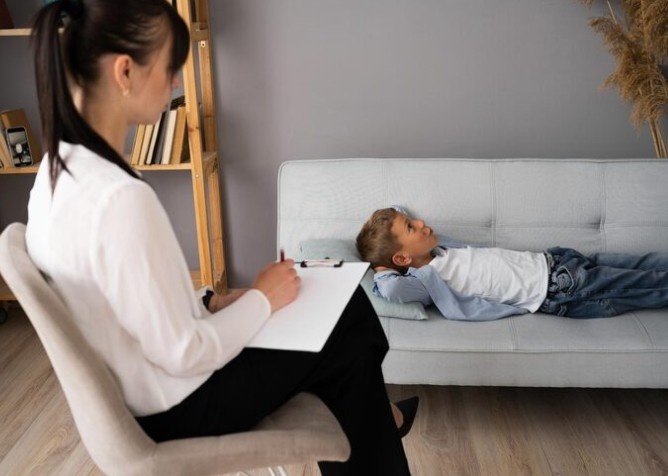
Child Psychiatrist Treatment in Rajendra Nagar focuses on understanding the child’s emotional and behavioural needs rather than simply looking at individual symptoms.
A child psychiatrist may speak with the child and parents to understand:
- When the anxiety started
- Situations that increase the child’s worries
- Changes in behaviour or mood
- School-related difficulties
- Family or social stress
- Sleep and daily routines
- Physical symptoms associated with anxiety
- Previous mental health or medical concerns
This assessment helps the clinician understand the child’s situation and develop an appropriate treatment approach.
AACAP explains that child and adolescent psychiatrists are trained to assess and treat emotional, behavioural, and psychiatric concerns affecting children, adolescents, and families.
Child Psychiatrist Treatment for School-Related Anxiety
School can be an important source of stress for some children. Examinations, academic pressure, bullying, friendship problems, classroom difficulties, or fear of making mistakes can contribute to anxiety.
A child may complain of stomach aches every morning, refuse to attend school, become extremely worried about homework, or avoid participating in class.
Child Psychiatrist Treatment in Rajendra Nagar can help identify whether anxiety, social concerns, learning difficulties, attention problems, or another emotional issue may be contributing to the child’s difficulties.
Depending on the situation, treatment may also involve communication with parents and appropriate school-based support. AACAP notes that child psychiatrists can help identify conditions affecting school functioning and recommend interventions that may support the child’s participation and academic progress.
Therapy and Behavioural Support for Childhood Anxiety
Psychotherapy is an important part of treatment for many children with anxiety. Cognitive Behavioural Therapy (CBT), for example, can help children understand anxious thoughts and learn healthier ways to respond to them.
Instead of simply telling a child, “Don’t worry,” therapy can teach practical skills for recognising worries, managing uncomfortable feelings, and gradually facing situations that have been avoided.
AACAP identifies CBT as an evidence-based psychological treatment for childhood anxiety disorders.
The exact approach depends on the child’s age, symptoms, personality, family situation, and specific needs.
When Is Medication Considered?
Medication is not automatically required for every child experiencing anxiety or stress.
For mild anxiety, psychotherapy and behavioural strategies may be sufficient. In more severe cases, or when symptoms do not improve adequately with therapy, a psychiatrist may consider medication as part of a broader treatment plan.
AACAP states that medication may be considered when anxiety symptoms are severe or when a child has only partially responded to psychotherapy. Such decisions should be made by a qualified clinician after an appropriate assessment.
Parents should never start, stop, or change psychiatric medication without professional medical guidance.
How Parents Can Support an Anxious Child
Professional treatment works best when children also receive understanding and support at home.
Parents can help by:
- Listening without immediately judging or dismissing the child’s worries.
- Maintaining predictable daily routines for sleep, meals, school, and activities.
- Encouraging children to talk about their emotions.
- Avoiding excessive reassurance or overprotection that may unintentionally reinforce avoidance.
- Teaching simple relaxation techniques, such as slow breathing.
- Working with teachers when school-related anxiety is affecting the child.
- Seeking professional help when anxiety persists or interferes with daily life.
NHS guidance recommends talking openly with children about their worries and seeking professional help when anxiety is severe, persistent, or affecting everyday life.
When Should Parents Consult a Child Psychiatrist?
Parents should consider professional assessment when anxiety:
- Continues for a long period
- Is becoming worse
- Interferes with school attendance or performance
- Affects friendships or family relationships
- Causes persistent sleep problems
- Leads to frequent avoidance
- Causes repeated physical complaints
- Significantly affects the child’s confidence or daily activities
Early support can help prevent anxiety from becoming more disruptive. AACAP notes that severe childhood anxiety can affect social and academic functioning, making timely assessment important.
Why Choose Professional Child Psychiatrist Treatment in Rajendra Nagar?
Children need an approach that considers their developmental stage, communication style, family environment, and individual circumstances.
Child Psychiatrist Treatment in Rajendra Nagar can provide a structured assessment and personalised treatment plan for children experiencing anxiety, stress, fears, emotional difficulties, or related behavioural concerns.
The aim is not simply to remove every feeling of worry. Instead, appropriate treatment can help children understand their emotions, develop coping skills, participate more comfortably in everyday activities, and receive the support they need as they grow.
FAQs
1. Is anxiety normal in children?
Yes. Occasional fear and worry are normal parts of childhood. Anxiety becomes more concerning when it is persistent, severe, or begins interfering with school, relationships, sleep, or everyday activities.
2. What are common signs of anxiety in children?
Common signs include excessive worrying, difficulty concentrating, sleep problems, irritability, avoidance, frequent reassurance-seeking, crying, and physical complaints such as headaches or stomach aches.
3. Can therapy help children with anxiety?
Yes. Evidence-based psychotherapy, including Cognitive Behavioural Therapy (CBT), is commonly used to help children understand and manage anxiety.
4. Does every anxious child need medication?
No. Treatment depends on the child’s symptoms and individual circumstances. Therapy and behavioural approaches may be sufficient for some children, while medication may be considered in selected cases of more severe or persistent anxiety.
5. When should parents seek professional help?
Parents should consider professional help when anxiety persists, becomes worse, or significantly affects school, family life, friendships, sleep, or normal activities.
Conclusion
Childhood anxiety and stress should not always be dismissed as a temporary phase, particularly when they begin affecting a child’s everyday life. With appropriate assessment and support, children can learn practical ways to understand their emotions and manage anxiety.
Child Psychiatrist Treatment in Rajendra Nagar can help parents identify the underlying concerns and explore suitable treatment options based on the child’s individual needs. Early professional guidance, combined with supportive parenting and appropriate therapy, can help children build healthier coping skills and move forward with greater confidence.
For More Information, Visit Now: https://share.google/NV45pEXhqzYD8VyN2